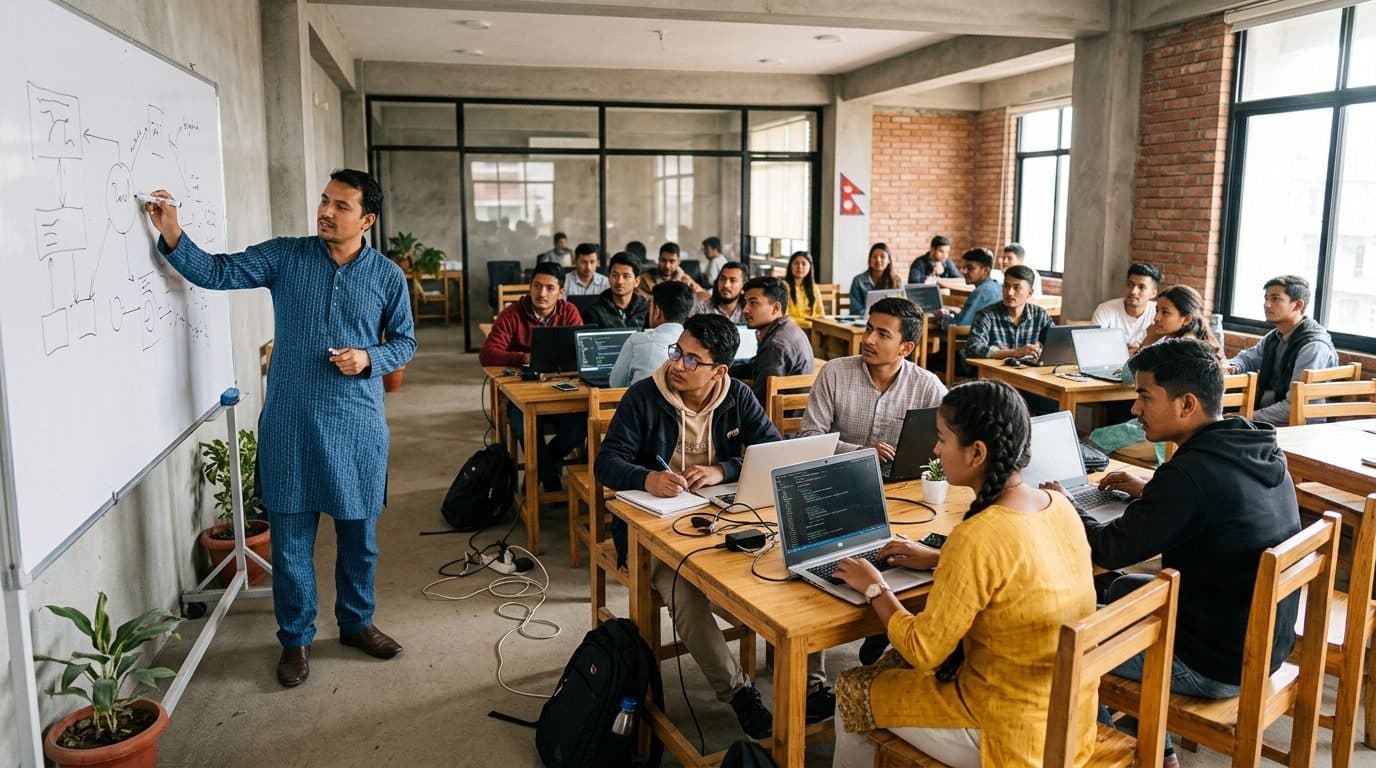
Nepal does not have a shortage of IT graduates. It has a shortage of job-ready ones. Here is what the research says about why, and what a program like Seepshila can do about it.
The numbers
- About 10,000 IT graduates enter Nepal's workforce each year, and many lack practical, industry-ready skills (NAS-IT, via The Himalayan Times).
- Youth unemployment (ages 15–24) was 20.6% in 2025, against a world average of 15.5% (World Bank and ILO data, via TheGlobalEconomy).
- In a survey of 384 students, the strongest predictors of employability were teamwork and problem-solving, practical training and university curricula (Khadka, NepJOL 2025).
Two of those three predictors, practical training and the curriculum, can be changed by how a program is designed.
Four causes
A Kathmandu University study of ICT graduate employability traces the gap to four causes:
- Too little practicum and work-based learning. Graduates can explain concepts but haven't applied them in a workplace.
- Curricula that lag industry. Syllabi change slowly; tools and practices change fast, so employers retrain new hires.
- Weak university–industry relations. Internships are informal or absent, and employers don't trust graduate readiness.
- Different views of readiness. Students feel job-ready; employers disagree about which skills matter.
What closes the gap
Seepshila answers each cause directly:
- Practical sessions in every credit-linked course, then three months of training and a three-month internship.
- Courses designed by reviewing the syllabus against current industry requirements.
- Industry partners who host interns and shape the skills students build.
- Skills defined by the employer, and a three-month internship that gives them time to assess.
Final-year projects run in groups of five, which builds the teamwork and problem-solving the survey found matter most.